

She Goes Barefoot
an ode to femininity

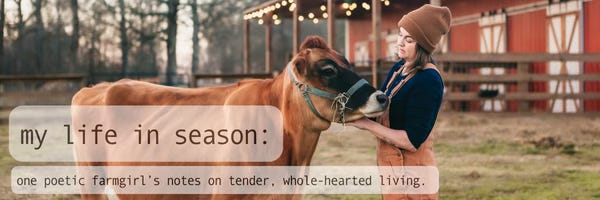
Whenever I can, I go barefoot, because that is how I started.
When I was a girl, I loved the dirt. I had loud laughter and grass-stained knees and a heart that loved everything it landed on, and no one had told me yet that this was too much. I talked to animals like they were people and to God like He was standing in the yard, because as far as I could tell, He was. I did not know yet that a girl was supposed to choose between being wholehearted and being taken seriously. I had not yet been to school on the subject of myself.
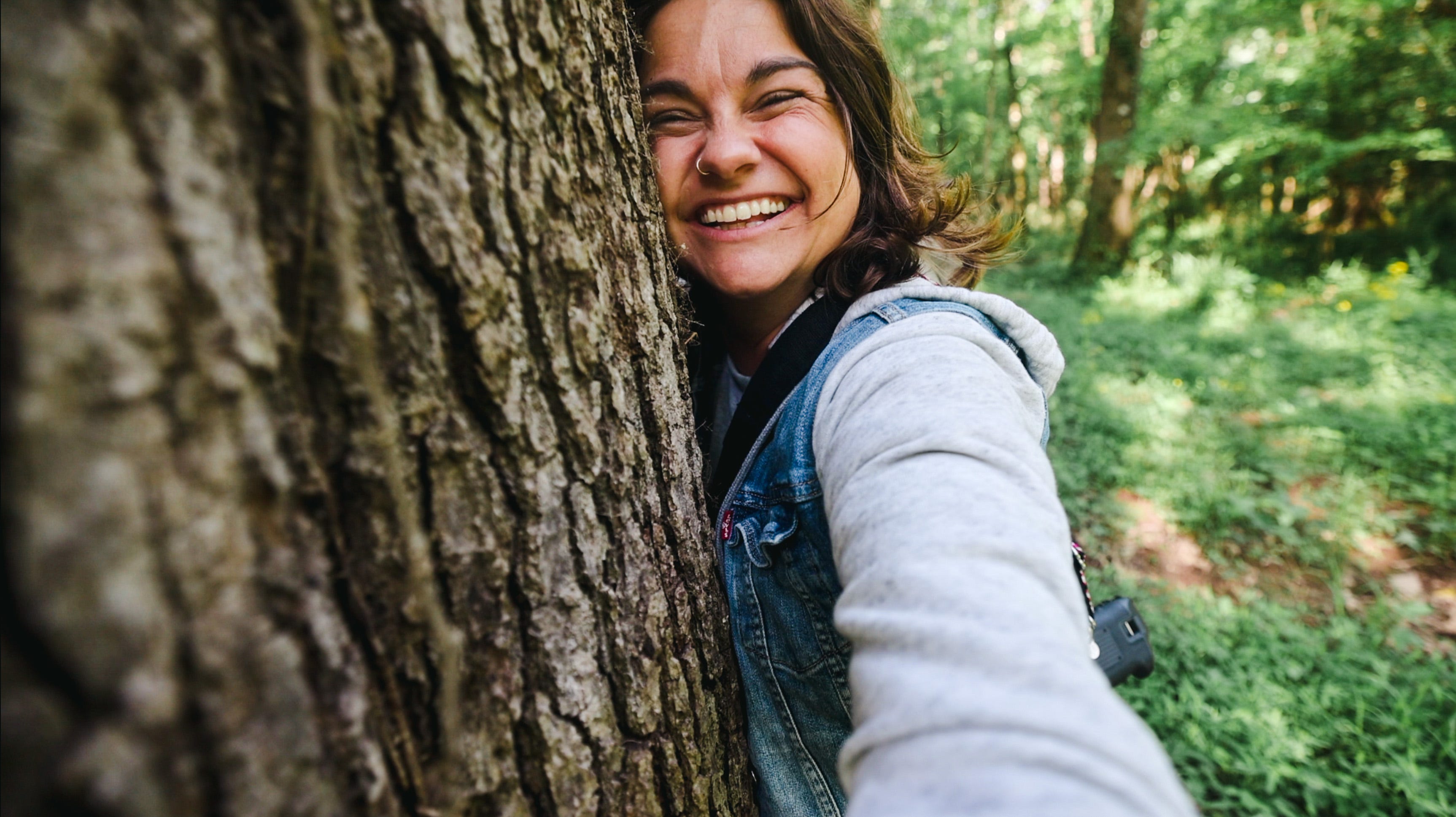
They would teach me. The world teaches every girl eventually, in a thousand small corrections. Lower your voice. Cover your knees. Cry somewhere else. Want less, and want it more quietly. And I was an earnest student. I spent years folding myself like linen, smaller and smaller, until I fit neatly in the drawer of what I thought a woman was supposed to be. I learned to run my tenderness through a filter before it left my mouth. I learned that I could buy a seat in almost any room with competence, so I paid in competence, over and over, and called it a fair price. I could out-work, out-plan, out-produce nearly anyone, and nobody warned me that a woman can build a whole impressive life as a hiding place.
But the garden never asked me to be smaller.
The garden was the first room I ever entered where tenderness was treated as skill. There, noticing is the whole job. There, the ones who thrive are the ones who kneel, who touch, who talk to things that cannot answer, who feel the rain coming in their body a day before the sky bears witness to it. In the garden, patience is not a virtue you perform. It is the entire economy. Nothing can be rushed, flattered, or impressed. A seed does not care about your competence. It cares whether you will show up in the heat, whether your hands are gentle, whether you know the difference between a weed and a beginning. I did not become someone new between the rows. I met someone old there. She had grass-stained knees. I had left her in the dirt thirty years before, and she had not moved. She had been growing things the whole time.
So this is an ode to what I got back.
To softness, which is not a fabric or a season or a way of acting, but a way of being so fully in the moment that the moment opens like a bloom. To intuition, that older sister of knowledge, who never shows her work and is never wrong about the weather. To the wide, embarrassing tenderness, the kind that cries over a hatched chick and a first tomato and means it every time.
To hands. My grandmother’s hands arriving slowly in the place of my own, hands that knead and plant and pull and hold, that have learned the difference between gripping and cradling. Hands that lean into a cow’s warm flank in the hazy mornings and come away with milk, that turn wheat into flour and flour into bread and turn bread out onto the table where no one leaves hungry. Hands that count stitches by lamplight, making a blanket the slow way, one loop at a time, because some kinds of love can only travel at the speed of wool.
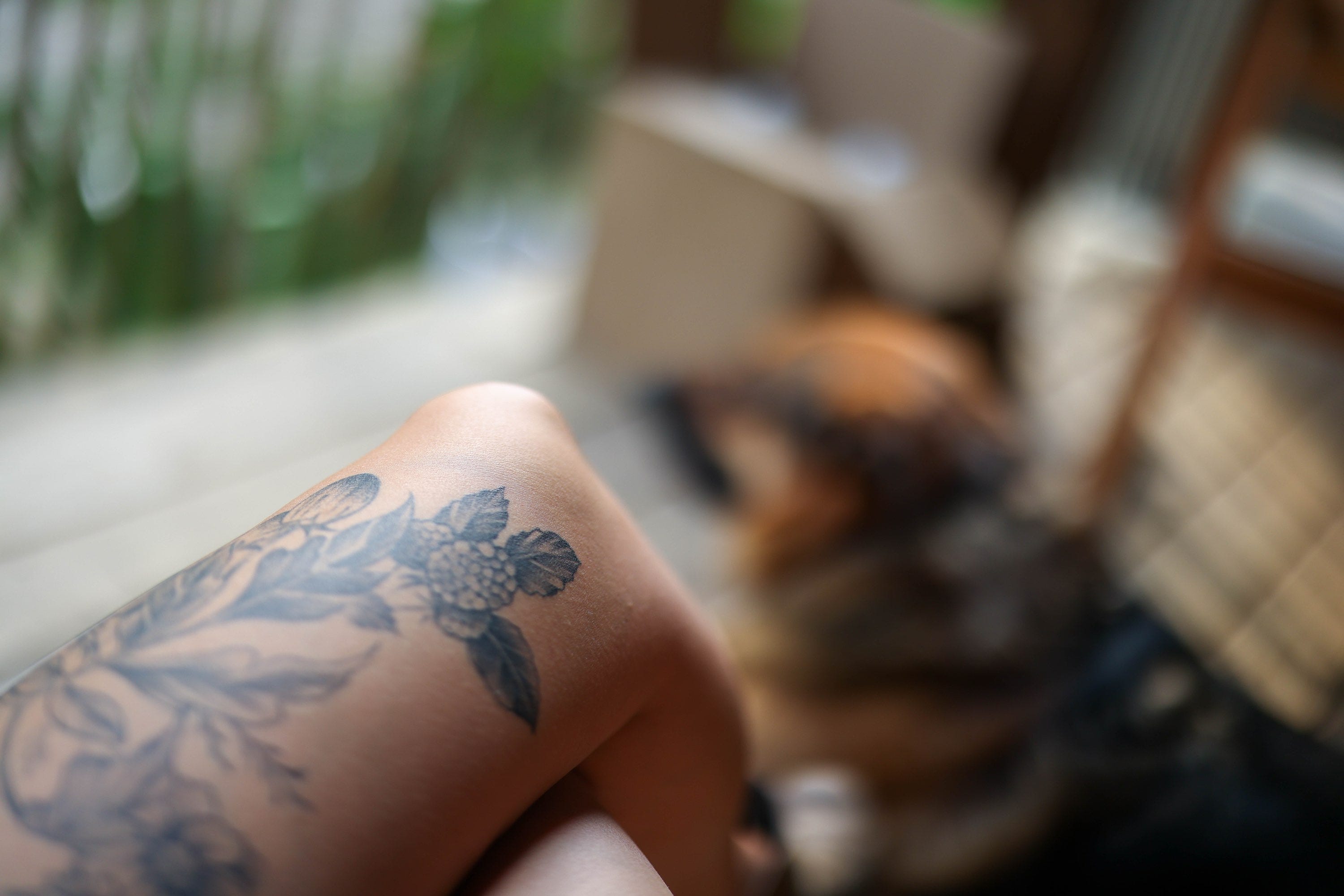
To the body, this soft animal that carries me down the rows, that I starved of kindness for years and that forgave me the way ground forgives, by simply growing what I planted in it. To the curve and the strength of it, made in an image I was never fully told about. To the fact that it keeps time with the seasons whether I consent or not, that it has always known things days before I did, that it never once believed the the hateful things I said about it.
To the voice. It was the first thing they corrected and the last thing I got back. I spent decades speaking half a note below myself, sanding my sentences smooth before I let them leave. But a woman’s voice was never meant to be the couch cushions in someone else’s living room. Now when something true rises in me, I let it arrive at full volume, and I have learned what that kind of voice actually does. It rips the curtains off the windows. It breaks the panes too and lets the breeze blow in, cool and cleansing.
To tears, which I was taught to take somewhere else and now let fall wherever I am standing. I have cried in the milking stall and at the sink and in front of my sons, and it never once made me smaller in their eyes. It taught them that water is what living things run on. A woman’s tears are not a crack in the vessel. They are proof the spring in her still runs.
To mothering, the longest work of my hands. I have grown humans the way I grow everything else, with dirt and patience and more forgiveness than method. I fed them from my body and then from my kitchen and now from a garden they labor beside me in, and I have learned that a mother is not a woman who never fails. She is a woman who keeps showing up in the heat.
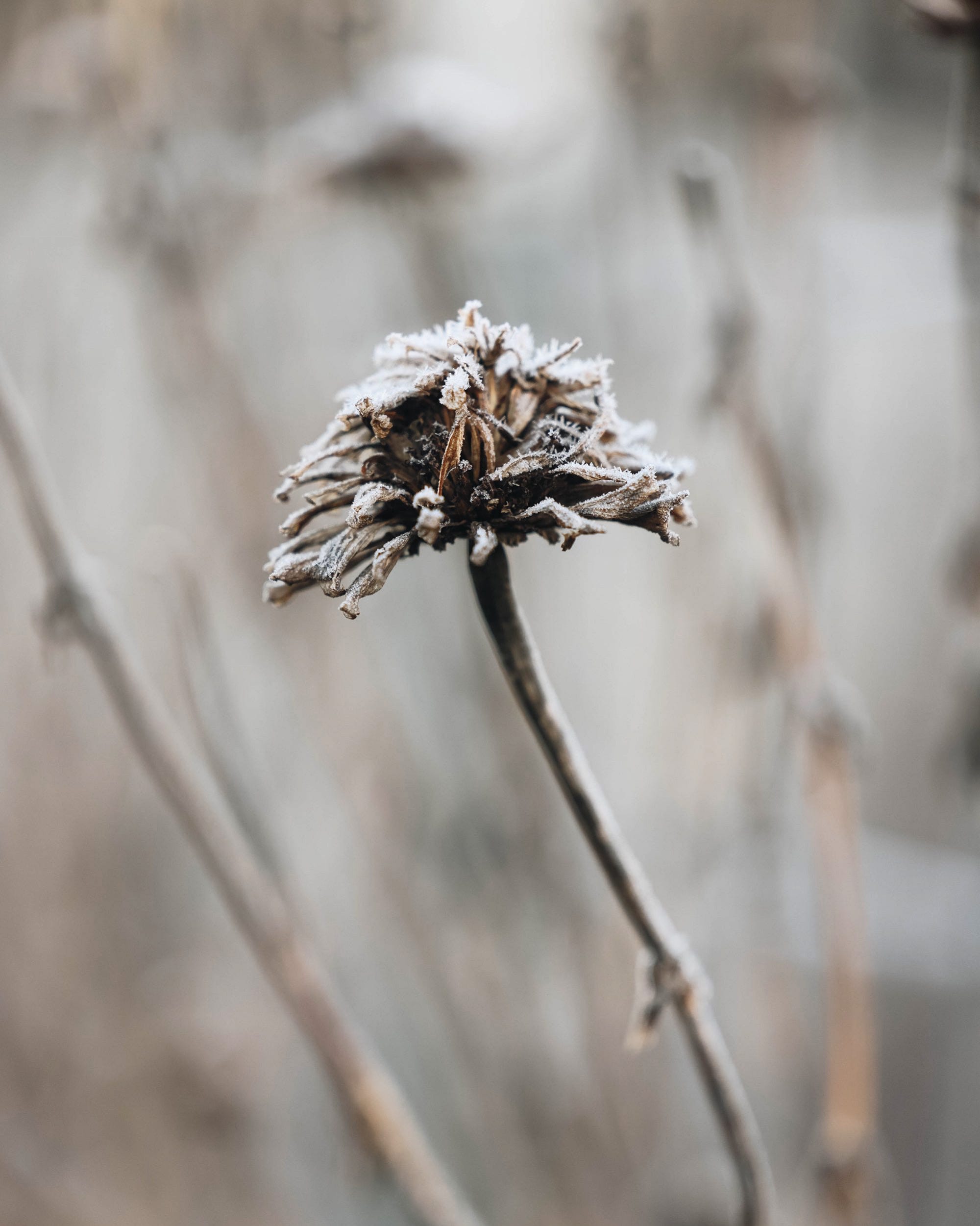
To the ripening. To the silver arriving in my hair like frost on the last of the zinnias, to a face that keeps a record now of every season it has laughed through. I was told a woman ripens toward invisibility. Nobody told me she ripens toward flavor. Every good thing I grow is at its best just past its prettiest, and it turns out, so am I.
And to the wildness. Because femininity is not only the bloom. It is also the storm that the bloom drinks from. It is the vine that will take the whole fence if you look away. It is the mother cow between you and her calf.
Once, when I was young and my marriage was young, long before I had heard a single soul say a word about the feminine in God, He told me I was Everest. Not a hill. Not a pleasant rise with a walking path and a bench at the top. Everest. And He told me not to insult my husband by shrinking, but to tower, and to demand every single thing in him rise to reach my peak. I did not fully believe it for years. I kept trying to be a more convenient altitude. But a mountain does not apologize for the air being thin at the top. A mountain is not cruel; it is simply all the way itself, and its whole gift to the people who love it is that it makes climbers out of them. Ask my husband. The summit of me has been the making of him, and he would be the first to say so. I no longer pretend otherwise out of politeness. I am done pretending the softness and the wildness are two different women. They are one woman. I have met her. I am becoming her. She goes barefoot.
I am forty now, and I dance a little, down the rows, when no one is watching. Sometimes when someone is. My sons think it is funny. My husband does not think it is funny at all; he thinks it is the weather report, and he is right. A woman dancing in her own garden is a flag run up a pole. It means all is well in the country of herself.
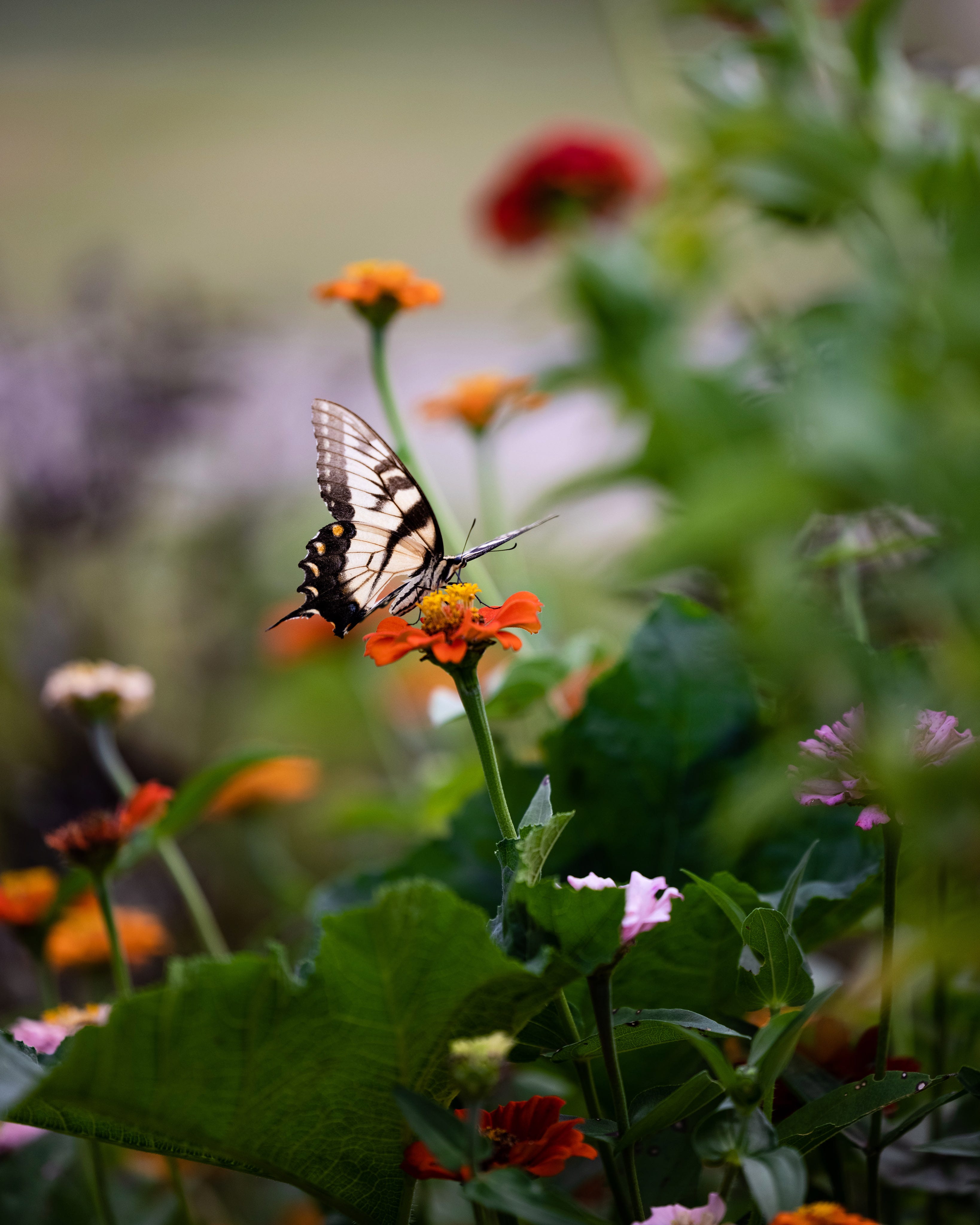
Once I asked a friend: when was the last time you beat your chest and let your arms swing? The last time you twirled until you fell down in the grass, or ran until your legs quit underneath you? When did you last roll down a hill? When did you last take to your knees and let a howl come up from a place so buried you could only feel the source of it between your thighs? She looked at me like I was crazy. I have carried that look for years, because I know now what it was. It was the cage, looking out at me. Shame builds its bars out of exactly those questions, out of what would they think and who do you think you are, and it keeps a woman still and small her whole life without ever once having to lock the door. But the bars were never iron. They break like kindling the moment a woman decides that what is in her is true and trustworthy. I have been breaking my cage to bits, bar by bar, for years now, and the breaking has been the whole of my becoming. So when the howl rises in me, I let it out twice. Once is for her.
Because there is a voice in the garden that calls me out in the early light, and everything it has ever asked of me is the one thing the world never did: to be more of what I already am. More passionate. More tender. More towering. More glad. I spent half a life learning to contain myself, and I will spend the rest of it unlearning, petal by petal, the idea that I was ever meant to be folded.
And if you have wondered, all this way down the page, how a woman could write like this about herself, I will tell you the secret of the whole ode: none of it was ever about me. You cannot flatter a mountain by describing it. You cannot make a garden vain by calling it glorious. Every line here is aimed past me, at the One whose image I have been wearing since the dirt, praise passing through a woman on its way home. I am not the glory. I am the ground it grows in. And that is why I can say it all without blushing, every lush and towering word: because it is Herself I am praising.
I started barefoot. I intend to finish that way.
Postscriptum
A few lines ago I told you I spent half a life learning to contain myself. Here is one of the shapes the containing took: for years, there were sentences my fingers would write and then unwrite, thoughts my heart had already signed that I deleted before anyone could see them. And there was one sentence I deleted more than any other, what with my fear of being misunderstood and my ability to believe things I couldn’t perfectly argue. There is a Mother in God.
I was twenty-nine when I began to understand it. I was on an airplane late on a Thursday night, flying west to a conference where I would be a speaker, and I was feeling particularly lonely. I poured my words into my journal, grasping for language for a hunger I did not know how to name: I wished I had more deep female friendships. And something met me there. I felt, all at once, a certainty I have never since been able to argue anyone into: that I already had such a friend. She was beside me. She was around me. She was in me and in everything. No one had ever told me there was a Mother in God. It did not come as a doctrine I had studied or a verse I had been taught. It came as a revelation, as real and sure as a warm body in the seat next to mine.
Of course I went looking afterward, to see whether the thing I had been handed could even be true, because surely it could not be. I’d spent my evangelical upbringing hearing all about Father, Son, and the assumedly male Holy Spirit. I was taught that Jesus came as a baby, born of a woman, to exalt the image of Yahweh, and still every part of the Trinity was only ever He. The idea of a female God was scandalous, and I meant to test it.
In my testing, I learned that some have long heard in the name El Shaddai an echo of shad, the Hebrew word for breast. The word for the Spirit, Ruach, is feminine in the Hebrew, and Scripture names that Spirit our Comforter, the one who comes to teach us all things, the one who brooded like a mother bird over the waters before there was anything at all. I was not building an argument. I was a woman checking the soundness of a floor she had somehow already been told she could stand on. The floor held. Because if I am a woman who bears the image, and there is no feminine in God, what exactly am I bearing?
I have a lot of thoughts on this, and I’m not sure I’m really ready to flesh them out entirely. However, I’ve been hearing a lot of people talk about the divine feminine, heralding a “soft girl summer” instead of a “hot girl” one. There is an ache in women to be exactly what they are meant to be. Not to be girl bosses, not to be some weaker version of a man, but to be tender and fruitful and towering all at once. To be Everest, and to bear, equally in softness and ferocity, the image of the One whose name is I Am. How long did I fight the very parts of me that were the Image I was created to carry? Too long, friends.
That is as far as I will take it today. But I did not delete the sentence this time, because I mean this ode. It is simply a story of my own freedom, and the containing is over.
I feel like I’ve just left the church of Jess! Amen and amen and amen. This made my heart sing. Your YouTube channel started me in my gardening journey. Fanned the dreams of being a farmer, saw me thru the move out of the city to the rural island on which we now live. Im so proud of you. Even though we have never met. And I’m so proud of me. And all of the women who read this and can see themselves in your words. Thank you. 🌺. From my daughters. From my animals. From the little girl that still lives in me.
This needs to be published in a book to be read over and over. It surely resonated with me.